Cut Over 70% of Dispatcher Call Load with AIDispatchSystem's AI Answering Service
Freight and trucking operations rely on speed, accuracy, and constant communication. As shipment volumes grow, dispatch teams become the central point of pressure, handling nonstop calls from drivers, carriers, brokers, and customers who all expect immediate answers. This case study examines how a freight company implemented AIDispatchSystem's AI answering service and 24/7 AI receptionist to modernize dispatch communication. By using voice AI for logistics, the company reduced call overload, improved response times, and created a scalable operating model without increasing dispatch headcount.
Company Background
The company operates as a mid-sized freight and trucking business headquartered in Texas, supporting regional and interstate freight movement across the Southern United States. Its operations depend heavily on efficient dispatch coordination and real-time communication across the supply chain.
Operational Challenges Before AI Adoption
Before deploying AIDispatchSystem, the company faced dispatch challenges common across freight and trucking operations.
1. Dispatcher Call Overload
Dispatchers spent most of their day answering repetitive logistics calls instead of managing freight movement and resolving exceptions.
2. Peak-Hour Call Spikes
Pickup and delivery windows caused unpredictable call surges, leading to missed calls and delayed responses.
3. After-Hours Call Backlogs
Calls outside business hours accumulated overnight, increasing next-day pressure on dispatch teams.
4. Manual Call Filtering
Dispatchers had no efficient way to separate routine inquiries from critical operational issues.
5. Costly Scalability
Reducing call load required hiring additional dispatchers, increasing payroll and training overhead.
The Solution: Implementing AIDispatchSystem
To address dispatcher overload, the company implemented AIDispatchSystem as a voice AI for logistics, purpose-built for trucking and freight communication. AIDispatchSystem was deployed as a 24/7 AI receptionist, acting as the first point of contact for inbound logistics calls. Routine calls were handled automatically, while time-sensitive or complex issues were escalated to human dispatchers. Core capabilities enabled included:
24/7 AI Receptionist for Logistics
AIDispatchSystem handled inbound logistics calls around the clock, eliminating missed after-hours calls and preventing next-day dispatcher backlogs caused by overnight driver and carrier inquiries.
Inbound Call Answering for Freight Operations
AIDispatchSystem answered high-volume freight calls instantly, identified caller intent, and resolved routine shipment questions without human involvement, significantly reducing dispatcher interruptions during peak hours.
Shipment Status & ETA Automation
AIDispatchSystem automated shipment status and ETA calls, removing repetitive "where is my load" inquiries that previously consumed a large portion of dispatcher time.
Exception-Based Call Escalation
AIDispatchSystem filtered routine logistics calls and escalated only urgent pickup, delivery, or disruption issues, allowing dispatchers to focus on high-impact operational decisions.
After-Hours Call Handling for Trucking
AIDispatchSystem captured and resolved night and weekend calls automatically, preventing call pileups and ensuring dispatch teams started each day without backlog pressure.
Implementation Process
The rollout of AIDispatchSystem followed a focused, low-risk approach:
Workflow Definition
Common dispatcher call types were identified and categorized by urgency and complexity.
AI Training
AIDispatchSystem was trained on freight terminology, dispatch language, and real call scenarios.
Go-Live
The AI receptionist was launched without hardware changes or operational downtime.
Optimization
Call flows were refined continuously using live call data and performance analytics.
Results After Deployment
The implementation of AIDispatchSystem's AI answering service delivered immediate and measurable results.
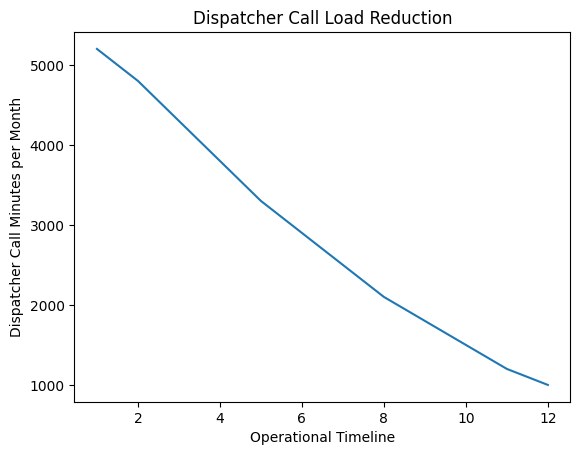
Dispatcher Call Load Reduction
Dispatcher call handling time dropped by over 70% as routine logistics calls were automated. Dispatch teams regained hours each day previously spent answering repetitive inquiries.
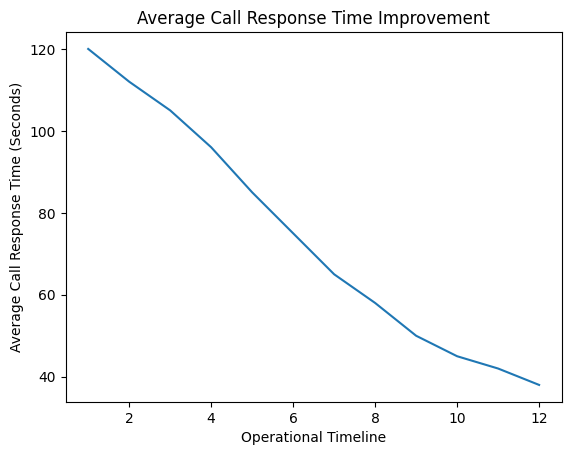
Faster Call Response Times
Average call response time improved by 38%, ensuring drivers, carriers, and customers received immediate answers without waiting for dispatcher availability.
Why AIDispatchSystem Worked for Dispatch Operations
Generic AI receptionists struggle in logistics environments because they lack operational context. AIDispatchSystem succeeded because it was designed specifically for voice AI for trucking and freight, with call flows aligned to real dispatch workflows. By filtering noise and escalating only what mattered, AIDispatchSystem transformed dispatch from a call center into a true operations control function.
“AIDispatchSystem now handles the repetitive calls our dispatch team struggled with. Automating those calls reduced overload and helped us operate more efficiently.”
Summary
This case study demonstrates how a freight company used AIDispatchSystem's AI answering service and 24/7 AI receptionist to cut dispatcher call load by more than 70%. By automating routine logistics calls and preserving human focus for critical decisions, the company built a faster, calmer, and more scalable dispatch operation.